
Complete classification of transformers
2026-05-14
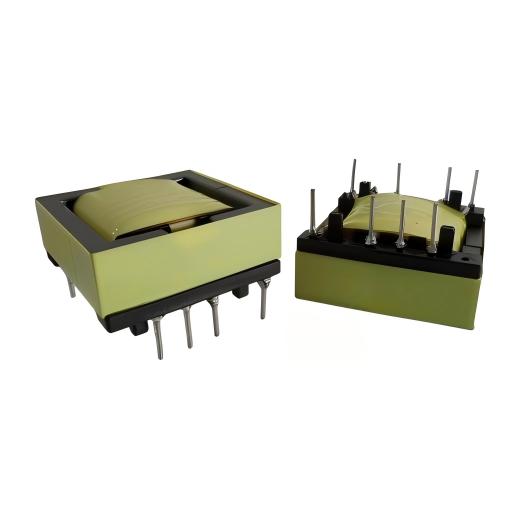
Classification of industrial transformers:
1. By number of phases:
A: Single-phase transformer: Used for single-phase loads and three-phase transformer banks, often suitable for small power, control, lighting, and small equipment.
B: Three-phase transformer: Used for voltage regulation in three-phase systems, often suitable for industrial main power sources, large power distribution, motors, and overall plant power supply.
2. By cooling method:
A: Dry-type transformer: Air self-cooling, epoxy resin casting, indoor, factory, and machine room fireproof and dustproof.
It relies on air convection for natural cooling or adds fans for cooling, mostly used in high-rise buildings, toll stations with electricity, and small-capacity transformers for local lighting and electronic circuits.
B: Oil-immersed transformer: Oil self-cooling, oil-air cooling, large-capacity distribution, outdoor substations.
It relies on oil as the cooling medium, such as oil self-cooling, oil-air cooling, oil-water cooling, forced oil circulation, etc.
3. By function and purpose:
A: Distribution transformer: Main power source for industrial enterprises, industrial parks, substations, responsible for high and low voltage power distribution and transmission, large capacity, strong stability.
B: Control transformer: Special for machine tools, automated production lines, control cabinets; converts high voltage to 220V/110V/36V/24V/12V, for control circuits, indicator lights, solenoid valves.
C: Isolation transformer: Complete electrical isolation, anti-interference, anti-electric shock, suppress harmonics; commonly used in precision instruments, medical equipment, laboratories, industrial precision measurement and control.
D: Auto-transformer: Single winding tap voltage regulation, can increase or decrease voltage; small size, low cost, no electrical isolation, mostly used for industrial voltage regulation, motor starting.
E: Rectifier transformer: Matching rectifier bridge, rectifier cabinet; electroplating, electrolysis, chemical industry, DC motor drive, rail transit DC power supply dedicated.
F: Inverter transformer: Special for photovoltaic, wind power, energy storage, grid-connected inverters, suitable for direct-to-indirect conversion, grid-connected power supply conditions.
G: Voltage regulating transformer: Contact-type, induction-type regulators, used for industrial experiments, equipment debugging, stable power supply.
H: Filter / Reactor transformer: Suppress harmonics, reactive power compensation, frequency conversion filtering, three-phase imbalance management, matching frequency converters, UPS, frequency conversion units.
I: Special industrial transformers, electric furnace transformers, mine explosion-proof transformers, ship transformers, high-temperature and anti-corrosion industrial transformers.
4. By winding form:
A: Double-winding transformer: Used to connect two voltage levels in the power system.
B: Three-winding transformer: Generally used in power system regional substations, connecting three voltage levels.
C: Auto-transformer: Used to connect different voltage power systems. Can also be used as a common voltage booster or voltage reducer transformer.
5. By core form:
A: Core-type transformer: Used for high-voltage power transformers.
B: Amorphous alloy transformer: Amorphous alloy core transformer uses new magnetic material, with a 80% reduction in no-load current, is an ideal distribution transformer with energy-saving effect, especially suitable for low-load areas such as rural power grids and developing regions.
C: Shell-type transformer: Used for special transformers with large current, such as electric furnace transformers, welding transformers; or for power transformers of electronic instruments and televisions, radios, etc.
6. By core structure:
A: EI type transformer: Most commonly used, low cost, versatile.
B: EE/EF/EPC/PQ/RM type: High-frequency switching power supply, industrial control adapter.
C: Ring-type transformer: Low leakage inductance, low noise, high efficiency, used in precision equipment, medical instruments.
D: C-type / CD-type transformer: Large power, high voltage resistance, used in industrial equipment, medium-frequency power supply.
E: Amorphous / nano-crystalline core transformer: Low loss, energy-saving, high frequency, dedicated to new energy.
7. By insulation and packaging form:
A: Open-type transformer: Bare winding, good heat dissipation, low cost.
B: Encapsulated sealed transformer: epoxy resin encapsulation, moisture-proof, dust-proof, shock-proof, resistant to harsh working conditions.
C: Planar transformer: PCB windings, ultra-thin and lightweight, high-density industrial control, server power supply.
8. Classified by voltage level:
A: Low-voltage industrial transformer: 1kV and below, operating frequency 50Hz/60Hz, standard industrial grid frequency; mostly used for plant power distribution, machine tool control, lighting power supply, three-phase power transformer, and is the most basic and largest category in industrial applications.
B: Medium-voltage industrial transformer: 1kV to 35kV, frequency several hundred Hz to 10kHz; suitable for induction heating, smelting furnaces, medium-frequency power supply, variable frequency speed regulation, electroplating and smelting equipment.
C: High-voltage industrial transformer: above 35kV, operating frequency 20kHz to several MHz; used for industrial switching power supply, photovoltaic inverter, energy storage converter, charging piles, industrial control power supply, high-frequency inverter equipment, with small size, high efficiency, and a significant trend towards lightweight.
CXWON Transformer takes the road of technological progress.
Definition, Function, and Classification of Power Transformers.
Related Article

Type E transformers generally have several hidden problems such as excessive voltage drop under load, abnormal temperature rise at full load, magnetic saturation of the core, batch performance drift, and long-term aging failure.
Verification method for E core transformer: Load testing, temperature rise testing and comprehensive reliability analysis
Interphase local short circuit is the most common, most concealed, most destructive and most likely to cause power outage among all core hazards.
Completely prevent inter-turn short circuits to ensure uninterrupted power supply for the transformer
The circular closed magnetic circuit transformer relies on the core structural advantages of no air gap continuous magnetic circuit, global symmetrical magnetic field, ultra-low leakage magnetic field, and uniform and constant magnetic resistance to solve industry pain points such as uneven magnetic flux distribution, electromagnetic coupling deviation, and dynamic parameter drift from the source of the magnetic circuit.
Circular closed magnetic circuit enhances the stability of transformer power supply
In fact, the main cause of multi-voltage imbalance is the unbalanced design of multiple windings in the secondary circuit of the transformer, inconsistent magnetic coupling, significant differences in leakage inductance, and mismatched internal resistance, which result in structural deviations.
Multiple sets of output winding designs eliminate transformer power supply voltage imbalance
SEND MESSAGE