
Home /Related News /The other more /Why do electric vehicle dc dc power converter prefer planar transformers? /
Why do electric vehicle dc dc power converter prefer planar transformers?
2026-08-10
In the electrical architecture of new energy electric vehicles, the DC-DC converter is the core on-board power component, responsible for reducing the high-voltage battery voltage to 12V or 24V for the low-voltage system, providing stable power for on-board central control, headlights, air conditioning, driving computer, and auxiliary electrical devices, and directly determining the stability, range performance, and driving safety of the entire vehicle's electrical system.
As new energy vehicles rapidly iterate towards 800V high-voltage platforms, high-frequency power supplies, high power density, and lightweight vehicle body, traditional wound-type high-frequency transformers have gradually exposed numerous shortcomings such as bulky size, poor heat dissipation, low parameter consistency, high high-frequency losses, and weak shock resistance, which cannot meet the stringent conditions of the new generation on-board DC-DC converters.However, planar transformers, with their ultra-thin structure, extremely low parasitic parameters, efficient heat dissipation, strong high-frequency adaptability, and high batch consistency, have become the standard solution for mainstream automakers' DC-DC converters. The replacement from traditional wound transformers to planar transformers is not merely a device upgrade, but an inevitable trend in the iterative evolution of on-board power supply architecture.
- The strict working conditions of electric vehicle DC-DC converters
The working environment of on-board DC-DC converters is far more complex and demanding than industrial power supplies or consumer electronic power supplies, and it has extreme differentiated requirements for the core transformer, which is also the core reason for the gradual elimination of traditional wound transformers.
Firstly, the space is extremely limited, and the vehicle cabin layout is compact. The power module must be ultra-thin, small-sized, and lightweight, eliminating redundant volume that occupies the vehicle cabin space and increases the vehicle's weight.
Secondly, the need for high-frequency development. Currently, mainstream new energy vehicle DC-DCs generally use GaN and SiC wide-bandgap devices, with working frequencies rising to 200kHz to 700kHz. Traditional wound transformers suffer from severe high-frequency skin effect, runaway parasitic parameters, and soaring losses, resulting in significant efficiency degradation in high-frequency conditions. At the same time, vehicle equipment needs to withstand a wide temperature range of -40°C to +125°C, complex environments such as road bumps and vibrations, and high humidity and dust resistance, with extremely high requirements for device heat dissipation performance, mechanical stability, and aging resistance.
In addition, vehicle power supplies have hard requirements for parameter consistency, EMC electromagnetic compatibility, and low-energy consumption range. Traditional manual winding transformers have high batch discreteness, high leakage inductance, and strong high-frequency interference, which easily leads to unstable power efficiency, EMI exceed the standard, and increased hidden power consumption in the vehicle, unable to meet the high-end quality requirements of new energy vehicles. Multiple strict working conditions make planar transformers with stronger adaptability the optimal solution for DC-DC converters.
- Core pain points of traditional wound transformers in on-board DC-DC
Traditional enameled wire wound transformers are classic solutions for low-frequency and ordinary high-frequency power supplies, but they cannot fully adapt to the working conditions of the new generation on-board DC-DC and have five fatal shortcomings, becoming the bottleneck for power supply performance upgrades.
Firstly, excessive volume and thickness, low power density. Traditional transformers rely on multi-layer enameled wire winding, with thick winding stack thickness and low magnetic core utilization, resulting in an overall bulky structure that cannot adapt to the ultra-thin modular design of the vehicle, increasing the vehicle's weight and space occupation, and not conducive to vehicle lightweighting and integration upgrades.
Secondly, high high-frequency losses, insufficient energy efficiency. Under high-frequency operating conditions, the traditional wire exhibits significant skin effect and proximity effect, resulting in a sharp increase in AC copper loss. Combined with the leakage inductance loss, the overall efficiency of the system becomes lower, indirectly reducing the vehicle's range.
Thirdly, the heat dissipation performance is poor, with prominent temperature rise risks. The traditional transformer windings are wrapped inside the magnetic core and frame, making it difficult for the heat to be conducted outward. The thermal resistance is as high as 15-20℃/W, and it is prone to accumulate heat and increase in temperature under full-load conditions. Long-term high-temperature operation accelerates insulation aging and reduces the power supply's service life. Fourth, the parameter consistency is poor, and the production stability is insufficient. The manual winding tension, wire arrangement, and turns number have deviations, and the leakage inductance and parasitic capacitance have large batch dispersion, resulting in inconsistent DC-DC converter output accuracy and significant differences in dynamic response, which is not conducive to the overall electrical consistency control of the vehicle. Fifth, the seismic performance is weak, and the vehicle compatibility is poor. The loose winding structure is prone to winding displacement, insulation wear, and parameter drift under long-term vibration conditions, causing hidden faults.
- The five core advantages of planar transformers for adapting to vehicle DC-DC
1. Ultra-thin and lightweight, maximizing power density
The planar transformer abandons the traditional frame winding structure and adopts a PCB copper foil or flat copper foil stacked planar winding. The magnetic core uses ultra-thin planar magnetic cores, and the overall thickness is reduced by more than 40% compared to traditional transformers, enabling millimeter-level ultra-thin packaging, perfectly adapting to the compact and modular layout requirements of vehicle DC-DC. The flat structure significantly increases the utilization rate of the magnetic core window and power density. Under the same power, the volume and weight are only 1/2 to 1/3 of traditional transformers, effectively reducing the vehicle's self-weight and optimizing the cabin space layout, aligning with the development trend of lightweight and integrated vehicles.
The planar transformer abandons the traditional frame winding structure and adopts a PCB copper foil or flat copper foil stacked planar winding. The magnetic core uses ultra-thin planar magnetic cores, and the overall thickness is reduced by more than 40% compared to traditional transformers, enabling millimeter-level ultra-thin packaging, perfectly adapting to the compact and modular layout requirements of vehicle DC-DC. The flat structure significantly increases the utilization rate of the magnetic core window and power density. Under the same power, the volume and weight are only 1/2 to 1/3 of traditional transformers, effectively reducing the vehicle's self-weight and optimizing the cabin space layout, aligning with the development trend of lightweight and integrated vehicles.
2. Extremely low parasitic parameters, suitable for wide bandgap high-frequency conditions
The laminated symmetrical winding structure of the planar transformer can precisely control the winding spacing and arrangement accuracy, stabilizing the leakage inductance within an extremely low range. Some high-end solutions have leakage inductance lower than 0.2%. At the same time, it significantly reduces the winding parasitic capacitance. Compared to traditional transformers, its high-frequency parasitic parameters have a significantly improved controllability, perfectly adapting to the 200kHz to 700kHz ultra-high-frequency working conditions of GaN and SiC devices, without high-frequency oscillation or peak interference, effectively reducing switching losses, improving the overall efficiency of the DC-DC converter, reducing vehicle ineffective energy consumption, and helping to increase range.
3. Ultra-efficient heat dissipation, suitable for vehicle wide-temperature conditions
The heat dissipation advantage is the core highlight of planar transformers for vehicle adaptation. Traditional transformers' heat accumulates within the windings, while the copper foil windings of the planar transformer are laid flat and have a large contact area. Heat can be quickly conducted through PCB heat conduction vias and heat dissipation base plates, with the overall thermal resistance reduced to below 5℃/W. The uniform planar heat dissipation structure eliminates local hotspots, with low full-load temperature rise and small temperature variation, capable of long-term stable tolerance to -40℃ to +125℃ vehicle wide-temperature cycling conditions, eliminating power supply faults caused by high temperature aging and thermal drift, and significantly improving the reliability of the DC-DC converter.
4. Fully automated production, highly consistent batch parameters
The planar transformer relies on PCB layout, automated stacking, and precise bonding processes, completely eliminating the process deviations of manual winding. The winding turns, spacing, symmetry, and tension are completely unified, with extremely low batch dispersion of leakage inductance, inductance quantity, and parasitic parameters. The highly consistent electrical parameters ensure that the output accuracy, dynamic response, and anti-interference ability of each DC-DC converter remain uniform, perfectly adapting to the quality control requirements of vehicle manufacturers' large-scale production, reducing batch defect rates and post-sale failure risks from the source.
5. High mechanical stability, suitable for vehicle vibration environment The flat winding is firmly bonded and solidified with the magnetic core, resulting in an extremely rigid overall structure without any loose winding hazards. It possesses excellent shock resistance, impact resistance, and deformation resistance capabilities, and can withstand complex vehicle-mounted conditions such as road bumps and vehicle vibrations for a long time. It will not experience winding displacement, insulation wear, or parameter deviation, ensuring the long-term stable operation of the vehicle's electrical system and significantly reducing the probability of hidden faults in the vehicle power supply.
- The Value Addition of Planar Transformers to the Vehicle's DC-DC System
The widespread adoption of planar transformers not only addresses the hardware shortcomings of traditional components but also helps to comprehensively upgrade the vehicle's power supply system. In terms of energy efficiency, the high-frequency and low-loss characteristics increase the DC-DC conversion efficiency by 2% to 5%, reducing battery inefficiency losses and effectively enhancing the vehicle's range; in terms of compliance, the controllable parasitic parameters significantly weaken high-frequency electromagnetic interference, reducing the difficulty of EMC rectification, and easily passing the strict electromagnetic compatibility certification for vehicles.
In terms of quality, the low temperature rise, high stability, and high consistency characteristics extend the lifespan of the DC-DC converter and reduce the cost of after-sales maintenance for car manufacturers; in terms of architecture, the ultra-thin and miniaturized design supports the modular and integrated upgrade of vehicle power supplies, adapting to the iterative demands of 800V high-voltage platforms and all-domain electronic control architectures, providing core hardware support for the electrical system upgrade of intelligent electric vehicles.
- Conclusion: Planar Transformers Are the Inevitable Choice for Vehicle DC-DC Iteration
The preference of automotive DC-DC converters for planar transformers is essentially the result of technological iteration driven by the industry trend of vehicle high-frequencyization, miniaturization, high reliability, and high energy efficiency. Traditional winding transformers are limited by structural shortcomings and cannot adapt to wide-bandgap high-frequency conditions, vehicle harsh environments, and the quality requirements of car manufacturers. In contrast, planar transformers, with their advantages of ultra-thin lightweighting, low parasitic losses, excellent heat dissipation performance, high consistency, and strong shock resistance and stability, precisely match the core requirements of vehicle DC-DC.
As the high-voltage platform for new energy vehicles becomes more widespread, power supply frequencies continue to increase, and vehicle integration levels keep improving, planar transformers will fully replace traditional winding transformers and become the standard configuration for vehicle DC-DC converters, OBC on-board chargers, and other core power supplies. They are the core foundation for the efficient, high-quality, and long-lasting development of the power supply system of new energy vehicles.
Application of custom inductors in New Energy Electric Motor Drive Systems
How to determine if a toroidy transformers is overloaded or overheating?
Related Article
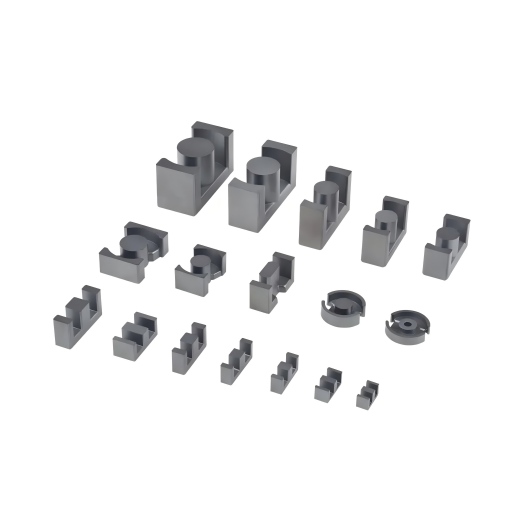
The three most commonly used soft magnetic materials for high-frequency transformers are: nanocrystalline materials, amorphous alloys, and ferrites. These materials have significantly different magnetic properties, and incorrect selection can lead to overheating, deterioration of EMI performance, and waste of costs.
Nanocrystals, amorphous materials, ferrites: How to choose the magnetic core materials for high-frequency transformers?
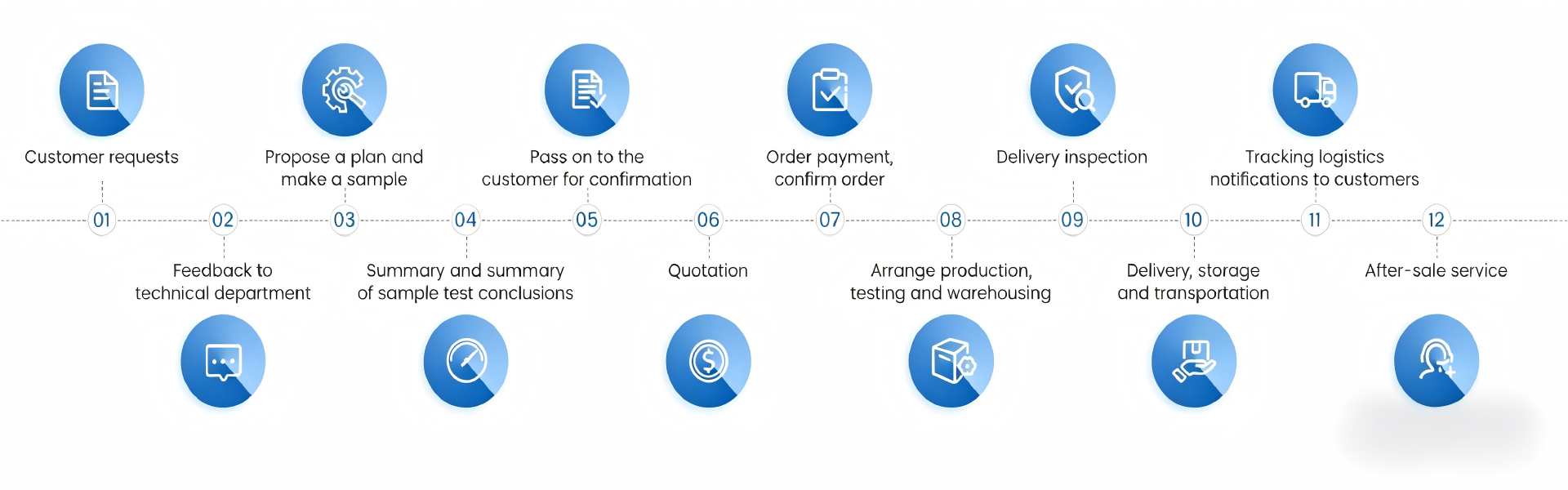
Customization of magnetic components starts with a customer providing a drawing or a set of parameters. From there, through multiple stages such as requirement communication, drawing review, material selection, winding and prototyping, tape wrapping and assembly, electrical testing, sample confirmation and packaging for shipment, the process involves numerous steps.
Customization process of magnetic component products: Comprehensive analysis from drawing to sample delivery.
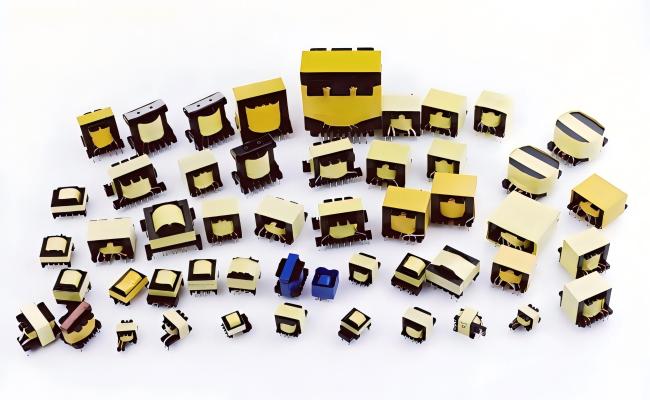
Practical SMPS transformer calculation tutorial. From parameter confirmation and core selection to winding, air‑gap and thermal verification for power supply design.
How to Calculate Switching Power Supply Transformers: A Complete Method from Parameter Determination to Core Selection

Customized magnetic components are not simple parameter adjustments; they are based on full-dimensional customized design of vehicle application scenarios, operating conditions data, and automotive standards, optimizing from material formulation, magnetic circuit structure, winding process, heat dissipation structure, protection system, and durability verification, completely solving the industry pain points of poor adaptability, short lifespan, and high failure rate of standard components.
How do custom magnetic components ensure longevity in harsh automotive environments?
SEND MESSAGE