
Home /Related News /The other more /Why is the trend towards miniaturization of power supply transformer irreversible? /
Why is the trend towards miniaturization of power supply transformer irreversible?
2026-08-11
In the rapidly evolving power electronics industry, miniaturization, lightweighting, and energy efficiency improvement have become hard-and-fast development trends. From traditional industrial power supplies, household adapters, to new energy storage systems, vehicle power equipment, and high-frequency inverter devices, the low-frequency (AC) transformers that once dominated the market are rapidly being replaced by high-frequency transformers. Many practitioners are puzzled: Low-frequency transformers are mature in technology, low in cost, and simple in process. Why have they gradually withdrawn from the high-end and mainstream production markets? Why has the high-frequency miniaturization iteration become an irreversible industry trend?
Essentially, the replacement of low-frequency transformers by high-frequency transformers is not a matter of technical preference, but rather a result driven by physical principles, industry requirements, energy efficiency standards, and industry evolution. Low-frequency AC transformers are limited by their 50Hz low-frequency working mechanism, having inherent shortcomings such as bulky size, low power density, high losses, slow response, and poor scene adaptability. They simply cannot meet the modern power equipment's requirements for miniaturization, high-frequency operation, and high energy efficiency.
- Core physical principles: Frequency determines volume, breaking the low-frequency constraint
The size of a transformer is primarily determined by the working frequency, following the core formula of Faraday's electromagnetic induction law: U = 4.44fNBS. Here, f is the working frequency, N is the number of turns in the winding, B is the magnetic flux density, and S is the cross-sectional area of the magnetic core. Under the condition of transmitting the same power and voltage, the working frequency is inversely proportional to the magnetic core cross-sectional area and the number of turns in the winding. This is the underlying physical logic for the miniaturization of high-frequency transformers and the inherent bottleneck that low-frequency transformers cannot overcome.
Low-frequency transformers are fixed at the extremely low 50Hz AC frequency, with a very slow change in magnetic flux. To achieve rated power transmission, they must rely on large magnetic core cross-sectional areas and a large number of turns to accumulate magnetic energy, compensating for the deficiency of low-frequency magnetic flux changes. For a 100W power level, traditional low-frequency AC transformers have a magnetic core cross-sectional area of 20cm², and the entire device weighs nearly 2kg; while operating at 100kHz, the high-frequency transformer requires only 2cm² of magnetic core cross-sectional area, reducing the weight to around 200g, and compressing the volume to 1/10 of that of low-frequency products, the gap is extremely significant.
High-frequency transformers increase the working frequency to several tens of kHz or even several hundred kHz, significantly improving the efficiency of magnetic energy turnover, and achieving efficient energy conversion without the need for large-volume magnetic cores and redundant windings. From a physical perspective, the higher the frequency, the less redundant material for the magnetic core and windings, and the higher the power density, making the miniaturization advantage more prominent.
- Material and structure differences: High-frequency architecture is suitable for lightweight iteration
Apart from the frequency principle differences, the magnetic core materials, winding structures, and process designs of high-frequency and low-frequency transformers are completely different, further widening the volume-performance gap and solidifying the miniaturization trend.
Low-frequency AC transformers uniformly use silicon steel sheet laminated magnetic cores, which are suitable for 50Hz low-frequency conditions, have high saturation magnetic flux density, but suffer from extremely high high-frequency losses, and cannot operate at higher frequencies. At the same time, silicon steel sheet core has a high density, a thick thickness, and a cumbersome structure. It must be paired with multiple layers of dense windings, resulting in an overall structure that is bulky and heavy, completely unable to meet the installation requirements of portable, integrated, and embedded devices. Moreover, the low-frequency transformer has a large number of windings and a large amount of wire material, with low copper material utilization, further exacerbating the redundancy of volume and weight.
High-frequency transformers use low-loss high-frequency specialized magnetic materials such as ferrite, amorphous alloy, and nanocrystalline. These materials have high magnetic permeability, extremely low high-frequency eddy current loss, and compact magnetic core structures, which can adapt to ultra-high frequency conditions ranging from 100kHz to 500kHz. At the same time, relying on the high-frequency efficient magnetic energy conversion characteristics, the number of windings is significantly reduced, the amount of wire material is streamlined, and the overall structure is compact and lightweight. Combined with automated precise winding and layered lightweighting processes, high-frequency transformers can achieve high-density integration, adapting to various small-sized packaging methods such as surface mount, vertical, and horizontal, perfectly meeting the micro-miniaturization design requirements of modern equipment.
It is worth noting that the structure of low-frequency transformers is fixed and cannot be lightweighted. No matter how the process is optimized, it cannot break through the volume limit brought by 50Hz low-frequency. While high-frequency transformers can continuously reduce volume and improve efficiency by upgrading magnetic materials, increasing frequency, and iterating processes, they have an unlimited space for iterative upgrades. This is also one of the core reasons why the miniaturization trend is irreversible.
- Performance Dimension Comparison: High-frequency Transformers Completely Outperform Low-frequency Products
Power miniaturization is not simply reducing volume, but ensuring and even improving the efficiency, stability, response speed, and service life of the equipment while reducing its size. High-frequency transformers have achieved comprehensive performance superiority on the basis of lightweighting, completely replacing the market position of low-frequency transformers.
1. Loss and Energy Efficiency: High-frequency is more energy-efficient, compatible with new energy efficiency standards
Low-frequency silicon steel sheet transformers have high iron loss and copper loss, large long-term no-load standby losses, and average full-load efficiency is only 85% to 90%, unable to meet the current sixth-level energy efficiency and high energy efficiency certification standards. While high-frequency transformers rely on low-loss magnetic materials and streamlined winding design, no-load losses are extremely low, and full-load efficiency can reach 93% to 98%, with significant energy-saving advantages, significantly reducing the long-term operating energy consumption of the equipment, and compatible with the strict energy efficiency upgrade trend worldwide.
2. Dynamic Response and Stability: High-frequency is suitable for complex scenarios
Low-frequency transformers have low working frequency, energy conversion lag, slow dynamic response speed, unable to adapt to the complex scenarios of rapid load switching and voltage dynamic fluctuations, prone to output instability, large ripple, and response delay problems. High-frequency transformers have fast high-frequency magnetic energy turnover speed, sensitive dynamic response, smooth load switching, pure output waveform, and high voltage regulation accuracy, able to perfectly adapt to the strict scenarios of new energy, industrial control, fast charging, and energy storage.
3. Scene Adaptability: High-frequency is suitable for integrated and intelligent equipment
Modern power equipment is generally developing towards integration, intelligence, portability, and embeddedness. PCB embedded, compact modules, high-density power clusters have become the mainstream. Low-frequency transformers are large in size, heavy in weight, and have high installation space requirements, unable to meet the integration needs of small equipment, and can only be used in old large-power fixed equipment. High-frequency transformers are small in size, flexible in packaging, and have strong compatibility, able to be easily integrated in precision electronics, vehicle equipment, energy storage modules, and communication power supplies, with a scene adaptability far exceeding that of low-frequency products.
4. Temperature Control and Reliability: High-frequency Conditions Are More Stable
Low-frequency transformers have high losses, severe heat accumulation, high full-load temperature, and are prone to insulation aging and device overheating failure problems. High-frequency transformers have low losses, controllable temperature rise, and compatible with precise sealing processes, stronger resistance to high temperatures, aging, and interference, capable of long-term 24-hour uninterrupted stable operation, significantly improving equipment reliability and service life.
- Why the Miniaturization Trend Is Completely Irreversible? Industry Underlying Logic Analysis
Many people believe that low-frequency transformers are merely "not advanced enough". In fact, they are completely inconsistent with the logic of modern industrial development. Elimination and replacement are inevitable outcomes. The trend of miniaturization and high-frequency iteration is completely irreversible. The core consists of three fundamental logics.
First, the physical limit is locked. The physical characteristics of the low-frequency 50Hz working frequency determine that it must rely on large-volume energy storage for conversion efficiency. No matter how the process and cost are optimized, it cannot break through the upper limit of volume and power density, and cannot adapt to the trend of lightweighting and integration. High-frequencyization is the only technical path that can continuously increase power density and reduce equipment volume.
Second, industry standards continue to upgrade. Global countries' energy efficiency standards and safety certifications are continuously tightened, and higher requirements are imposed on power standby loss, conversion efficiency, equipment volume, and electromagnetic compatibility. The defects of low-frequency transformers, such as high loss, low efficiency, and large volume, have already been unable to pass the latest energy efficiency certification and gradually lose market access qualifications.
Third, industrial iteration forces upgrading. New energy, intelligent manufacturing, consumer electronics, energy storage, and photovoltaic industries are rapidly emerging, and miniaturization, high-density integration, and lightweighting are core necessities. Low-frequency bulky equipment cannot adapt to the design of new products, and only high-frequency small-sized transformers can meet the upgrading needs. Market demand continuously forces technological iteration, gradually making low-frequency products exit the mainstream market.
- The Current Value and Market Position of Low-Frequency Transformers
It is necessary to clarify that the irreversibility of the non-continuous miniaturization of high-frequency transformers does not mean the complete elimination of low-frequency transformers. In traditional scenarios where there are no requirements for volume, extreme sensitivity to cost, and simple working conditions, such as old industrial distribution cabinets, simple industrial-frequency power supplies, and large fixed-type power transformation equipment, low-frequency transformers still have a small amount of application space due to their advantages of mature technology, high resistance to high-voltage impact, simple structure, low failure rate, and low cost. However, their market scope continues to shrink and is no longer the industry mainstream. Miniaturization and high-frequencyization remain the absolute development trend.
- Summary
The comprehensive replacement of low-frequency transformers by high-frequency transformers and the trend of power supply miniaturization are irreversible trends. Essentially, they are the inevitable results of the combined effects of physical laws, energy efficiency upgrades, industrial iteration, and scene requirements. Low-frequency and industrial-frequency transformers are limited by the 50Hz low-frequency mechanism, bulky silicon steel sheet structure, and high-loss characteristics, inherently having the fatal shortcomings of bulky volume, low power density, poor energy efficiency, and weak adaptability, and cannot meet the development needs of modern power electronic equipment.
High-frequency transformers rely on high-frequency magnetic energy efficient conversion, low-loss magnetic materials, and lightweight structural design to achieve extremely reduced volume, significant improvement in energy efficiency, and comprehensive optimization of performance, perfectly aligning with the industry trend of integration, miniaturization, and high energy efficiency. In the future, with the popularization of GaN and SiC wide-bandgap devices, the working frequency of power supplies will further increase, and the miniaturization, efficiency, and integration degree of transformers will continue to upgrade. The industry pattern of high-frequency replacing low-frequency will be completely solidified, and the trend of miniaturization will never reverse.
Micro Transformers and Magnetic Components Precision Control in Smart Electricity Meters
Analysis of the Demand for Isolation Transformers in Energy Storage Systems (ESS)
Related Article
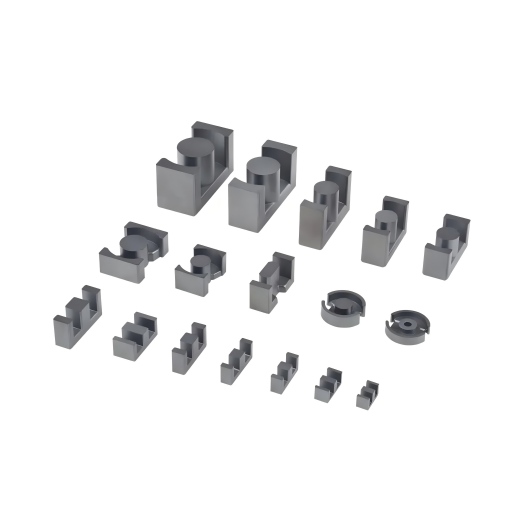
The three most commonly used soft magnetic materials for high-frequency transformers are: nanocrystalline materials, amorphous alloys, and ferrites. These materials have significantly different magnetic properties, and incorrect selection can lead to overheating, deterioration of EMI performance, and waste of costs.
Nanocrystals, amorphous materials, ferrites: How to choose the magnetic core materials for high-frequency transformers?
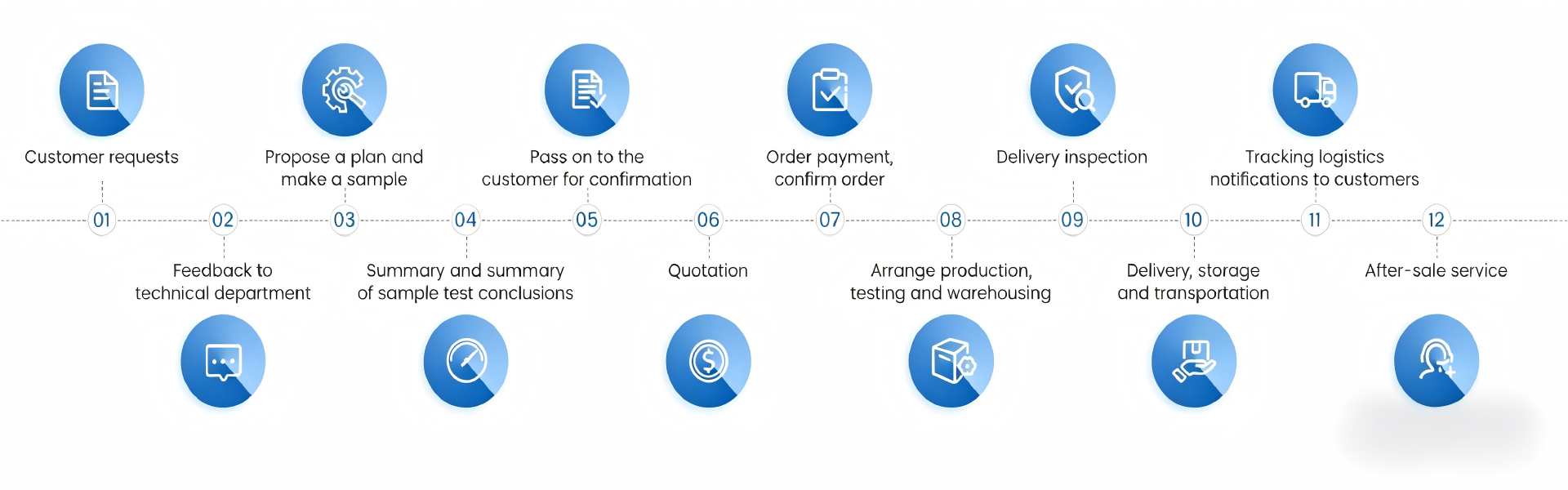
Customization of magnetic components starts with a customer providing a drawing or a set of parameters. From there, through multiple stages such as requirement communication, drawing review, material selection, winding and prototyping, tape wrapping and assembly, electrical testing, sample confirmation and packaging for shipment, the process involves numerous steps.
Customization process of magnetic component products: Comprehensive analysis from drawing to sample delivery.
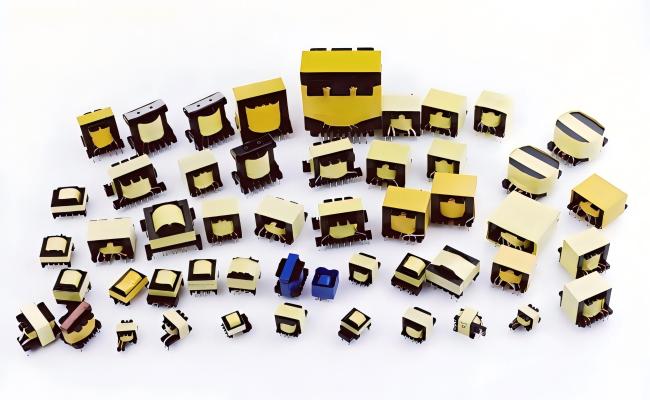
Practical SMPS transformer calculation tutorial. From parameter confirmation and core selection to winding, air‑gap and thermal verification for power supply design.
How to Calculate Switching Power Supply Transformers: A Complete Method from Parameter Determination to Core Selection

Customized magnetic components are not simple parameter adjustments; they are based on full-dimensional customized design of vehicle application scenarios, operating conditions data, and automotive standards, optimizing from material formulation, magnetic circuit structure, winding process, heat dissipation structure, protection system, and durability verification, completely solving the industry pain points of poor adaptability, short lifespan, and high failure rate of standard components.
How do custom magnetic components ensure longevity in harsh automotive environments?
SEND MESSAGE