
Home /Related News /The other more /Micro Transformers and Magnetic Components Precision Control in Smart Electricity Meters /
Micro Transformers and Magnetic Components Precision Control in Smart Electricity Meters
2026-08-12
Smart electricity meters are the core terminal devices for data collection, power measurement, load monitoring, and electricity bill settlement in the smart grid. The stability and accuracy of measurement directly affect the fairness of grid trade settlement, the accuracy of line loss statistics in the distribution area, and the reliability of grid dispatching. Compared to traditional mechanical electricity meters, modern smart electricity meters all use miniature current transformers, miniature voltage transformers, and precise magnetic sensing elements to complete electrical signal sampling, featuring small size, high integration, and the advantage of being suitable for surface-mount modules.
However, the miniaturization structure brings new challenges in precision control: the small-volume magnetic cores have limited flux capacity, higher leakage flux, more sensitive temperature drift, and poor microcurrent linearity, which easily lead to measurement faults such as ratio error, angular error exceeding limits, low-load inaccuracy, temperature range drift, and harmonic distortion. Industry measurements show that ordinary low-end miniature transformers have an accuracy drift of more than ±0.35% under high and low temperature conditions, far exceeding the 0.2S and 0.5S level of electricity meter measurement standards.
- Core Impact of Miniature Magnetic Components on the Measurement Accuracy of Smart Electricity Meters
The principle of electricity metering in smart electricity meters is to collect real-time current and voltage signals through miniature CT current transformers and PT voltage transformers, and achieve power statistics through chip integration and calculation. Magnetic components are the first step in signal acquisition, and their linearity, magnetic stability, loss characteristics, and temperature characteristics directly determine the upper limit of the entire machine's measurement accuracy, being the most critical precision-determining component of the electricity meter.
Most measurement errors are basically caused by defects in magnetic components: unstable magnetic core permeability leads to non-linearity in sampling, uneven leakage flux causes angular deviation, magnetic decay at high temperatures leads to over-limit under full load, and insufficient excitation current in microcurrent leads to inaccuracy under light load. Unlike industrial high-power transformers, the volume of smart electricity meter miniature transformers is limited, the cross-sectional area of the magnetic core is small, and the excitation ampere-turns are low. The requirements for material purity, symmetrical winding, uniform air gap, and temperature drift coefficient are several times stricter than those of ordinary transformers. Even a small process deviation can cause a downgrade in measurement grade.
The grid conditions are complex and changeable, including load fluctuations, harmonic interference, high and low temperature cycles, and long-term uninterrupted operation. If the precision control of magnetic components is not in place, there will be batch quality problems such as abnormal line loss in the distribution area, user measurement deviations, and failure of electricity meter batch calibration, seriously affecting the accuracy of grid operation and settlement.
- Four Core Mechanisms of Precision Deviation in Miniature Transformers
1. Inherent Error of Magnetic Core Materials
Common ferrite and low-end silicon steel sheet magnetic cores have problems such as high coercivity, high magnetic loss, and severe temperature drift in magnetic permeability. In microcurrent conditions, the excitation is insufficient, the magnetic flux linear range is narrow, and it is prone to non-linearity in magnetization. Especially in the wide temperature range of -30°C to +70°C, the parameter drift of the magnetic core will directly lead to under-counting under light load and over-counting under heavy load, which is the core material cause of unstable electricity meter accuracy. High-end nanocrystalline and amorphous magnetic materials can control the temperature drift coefficient within ±5ppm/℃, significantly reducing temperature errors.
Common ferrite and low-end silicon steel sheet magnetic cores have problems such as high coercivity, high magnetic loss, and severe temperature drift in magnetic permeability. In microcurrent conditions, the excitation is insufficient, the magnetic flux linear range is narrow, and it is prone to non-linearity in magnetization. Especially in the wide temperature range of -30°C to +70°C, the parameter drift of the magnetic core will directly lead to under-counting under light load and over-counting under heavy load, which is the core material cause of unstable electricity meter accuracy. High-end nanocrystalline and amorphous magnetic materials can control the temperature drift coefficient within ±5ppm/℃, significantly reducing temperature errors.
2. Leakage and Uneven Magnetic Flux Distribution in Miniature Structures
The magnetic core of miniature transformers is small in size and the winding window is compact. Manual winding is prone to uneven winding, winding misalignment, and deviation in the number of turns, resulting in an asymmetrical magnetic circuit and uneven leakage flux. The imbalance in magnetic flux distribution directly causes double deviation of ratio and angular errors, leading to phase sampling distortion and inaccurate power factor measurement, which is also the main source of reactive power measurement errors in smart electricity meters.
3. Insufficient Excitation in Microcurrent Under Light Load
Smart electricity meters need to cover the full range of current sampling from 1% to 120%. Under light-load conditions, the primary ampere-turns are very low, and ordinary miniature transformers have insufficient excitation energy, causing the magnetic core to work in a non-linear magnetization zone, resulting in a cliff-like drop in sampling accuracy and the occurrence of the common problem of light-load over-limit, unable to meet the 0.2S high-precision measurement grade requirements.
4. Environmental Temperature Drift and Long-Term Aging Drift The power grid meters operate outdoors all year round, with large temperature differences and strong humidity fluctuations. The magnetic components will undergo long-term alternating magneticization, resulting in aging of magnetic performance, attenuation of magnetic permeability, and increase in losses. This leads to gradual deviation in the accuracy of batch meters within 1-2 years of use, and causes batch measurement deviations.
- Selection of High-Precision Magnetic Materials: Locking Precision from the Source
The first step in precision control is material upgrading. Smart meters for high-precision measurement have completely eliminated ordinary ferrite and conventional silicon steel sheets, and mainstream high-end meters uniformly adopt nano-crystalline and amorphous alloy precision magnetic cores. These materials have uniform grain sizes, extremely low coercivity, extremely high magnetic permeability, a wide range of magnetic linearity, and can perfectly adapt to the full range of current sampling.
The temperature drift coefficient of nano-crystalline magnetic cores can be stably controlled within ±5 ppm/℃, far better than the ±15-25 ppm/℃ of ordinary magnetic materials. Parameters hardly drift under high and low temperature conditions; at the same time, the high-frequency harmonic loss is extremely low, which can effectively suppress sampling distortion caused by grid harmonics and adapt to the complex grid environment with harmonics in modern times. Through precise material selection, the base error of transformers can be compressed to within 0.05%, providing a hardware foundation for 0.2S and 0.5S high-precision meters.
- Structural and Process Precision Control: Solving Leakage Flux and Phase Error
1. Ring Closed Magnetic Circuit Design, Minimizing Leakage Flux
Micro transformers preferentially adopt complete closed ring-shaped magnetic cores, without breaks or air gaps, with a uniformly closed magnetic circuit. Compared with open-type and laminated structures, the leakage flux is reduced by more than 90%, and the magnetic flux distribution is highly symmetrical. This ensures the accuracy of active and reactive power measurement from the structural aspect.
Micro transformers preferentially adopt complete closed ring-shaped magnetic cores, without breaks or air gaps, with a uniformly closed magnetic circuit. Compared with open-type and laminated structures, the leakage flux is reduced by more than 90%, and the magnetic flux distribution is highly symmetrical. This ensures the accuracy of active and reactive power measurement from the structural aspect.
2. Micro-Grade Precision Winding Process
The deviation of the number of turns and the asymmetry of the winding lines in the meter transformer are the main causes of batch errors. The high-precision control scheme uses an automatic constant tension winding equipment to strictly control the tolerance of the number of turns within ±0.3%. The winding is uniform and symmetrical, and the layer-to-layer arrangement is flat, ensuring the stability of the secondary induced signal. At the same time, it eliminates defects such as eccentric winding and uneven density, ensuring the consistency of the magnetic circuit of each transformer.
3. Zero Flux Compensation Technology Optimization
For the problem of micro-current sampling deviation, high-end meter transformers are equipped with zero flux compensation windings. By reversing the magnetic potential to cancel the excitation error, it completely solves the nonlinear error under light load and achieves balanced full-range accuracy, meeting the precise sampling requirements under extremely low loads. This is the core process scheme for 0.2S level high-precision meters.
- System Calibration and Mass Production Quality Control: Ensuring Batch Precision Consistency
The high precision of a single sample cannot represent the quality of the batch. The magnetic components of smart meters must establish a full-process calibration and quality control system. First, complete full-range multi-point error calibration is carried out before leaving the factory, covering light load, half load, full load, and overload conditions, correcting the phase difference and angle difference deviation. Secondly, add high and low temperature cycling tests to screen out products with temperature drift exceeding the limit, and avoid precision drift in the field operation in advance.
The production process strictly implements parameter sorting, screening the magnetic core magnetic permeability, loss, and coercivity in a graded manner, and controlling the parameter dispersion of the same batch of products within an extremely narrow range. At the same time, adopt a vacuum immersion curing process to fix the winding structure, avoiding parameter drift caused by long-term vibration and temperature changes, ensuring the stable metering throughout the entire life cycle.
- Industry Standards and Implementation Value
The national power grid and southern power grid strictly implement the GB/T 17215 and IEC 62053 measurement standards, and have clear mandatory requirements for the full-range accuracy, temperature drift characteristics, and long-term stability of micro transformers. Incomplete precision control of magnetic components will directly lead to failure of metering network certification, batch returns, and excessive line loss in the distribution area, etc., major problems.
Through a complete set of precision control solutions including material upgrading, structural optimization, precise processing, and accurate calibration, the miniature transformers can maintain a high accuracy of 0.2 class or 0.5 class for a long time, significantly reducing the operational errors of the electricity meters, decreasing the maintenance and rectification costs, and enhancing the credibility of the power grid data collection. It is an important foundation of the high-precision measurement system in the smart grid.
- Summary
The bottleneck of the measurement accuracy of intelligent electricity meters is essentially the magnetic path precision, process precision, and temperature stability precision of the miniature transformers and magnetic components. The leakage magnetic field, non-linear magnetization, temperature drift, and load deviation caused by the miniaturized structure are the core hidden causes of the meter measurement deviation. Systematic precision control requires multi-dimensional collaborative optimization in aspects such as magnetic material selection, magnetic circuit structure, precise winding, error compensation, temperature correction, and batch quality control to completely solve the accuracy deviation problems in the entire range, entire temperature range, and entire life cycle.
Under the development trend of refined metering and digital operation in the smart grid, the high-precision control capability of miniature magnetic components has become the core competitiveness for the quality upgrade, network entry compliance, and stable operation of intelligent electricity meters, and is a key technical support for ensuring fair settlement of grid electricity, accurate statistics of line losses, and precise scheduling of loads.
Automotive magnetic components in hybrid vehicles and systematic solutions
Why is the trend towards miniaturization of power supply transformer irreversible?
Related Article
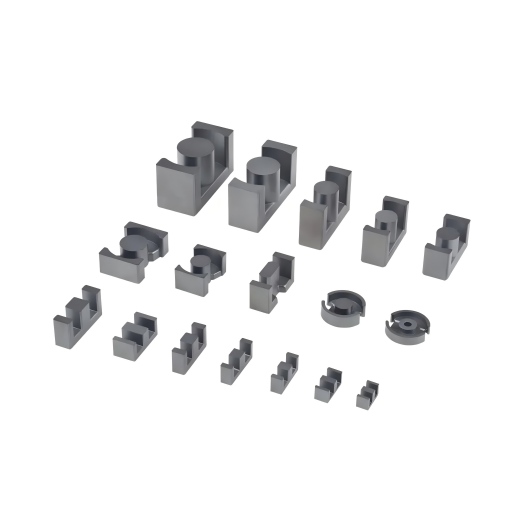
The three most commonly used soft magnetic materials for high-frequency transformers are: nanocrystalline materials, amorphous alloys, and ferrites. These materials have significantly different magnetic properties, and incorrect selection can lead to overheating, deterioration of EMI performance, and waste of costs.
Nanocrystals, amorphous materials, ferrites: How to choose the magnetic core materials for high-frequency transformers?
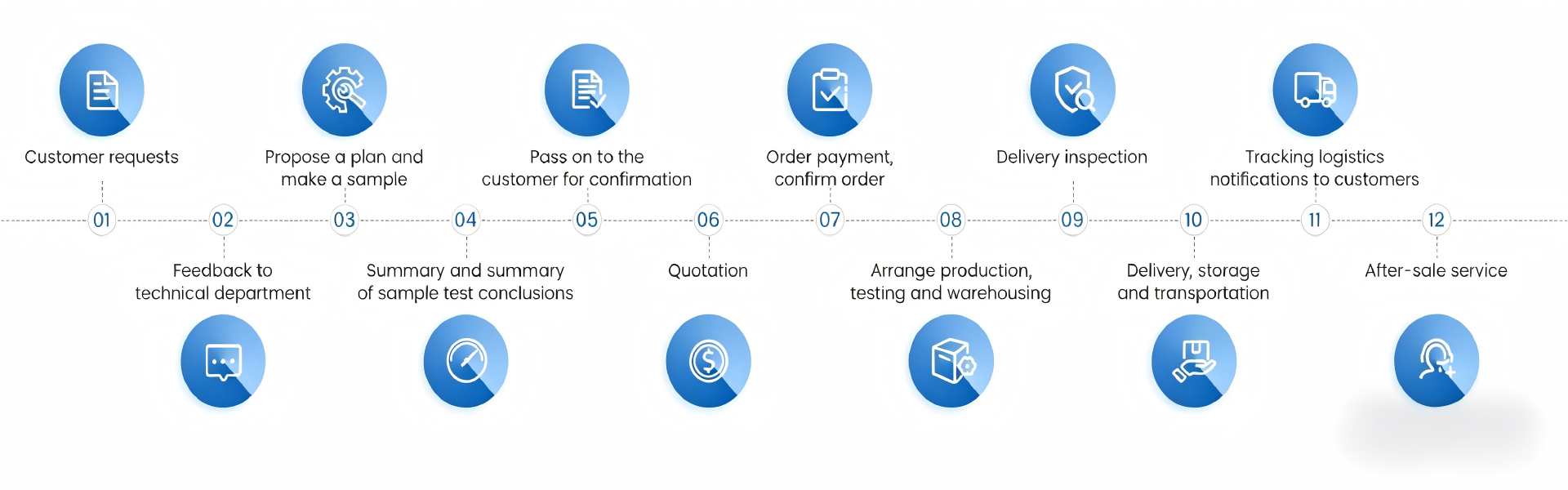
Customization of magnetic components starts with a customer providing a drawing or a set of parameters. From there, through multiple stages such as requirement communication, drawing review, material selection, winding and prototyping, tape wrapping and assembly, electrical testing, sample confirmation and packaging for shipment, the process involves numerous steps.
Customization process of magnetic component products: Comprehensive analysis from drawing to sample delivery.

Practical SMPS transformer calculation tutorial. From parameter confirmation and core selection to winding, air‑gap and thermal verification for power supply design.
How to Calculate Switching Power Supply Transformers: A Complete Method from Parameter Determination to Core Selection

Customized magnetic components are not simple parameter adjustments; they are based on full-dimensional customized design of vehicle application scenarios, operating conditions data, and automotive standards, optimizing from material formulation, magnetic circuit structure, winding process, heat dissipation structure, protection system, and durability verification, completely solving the industry pain points of poor adaptability, short lifespan, and high failure rate of standard components.
How do custom magnetic components ensure longevity in harsh automotive environments?
SEND MESSAGE